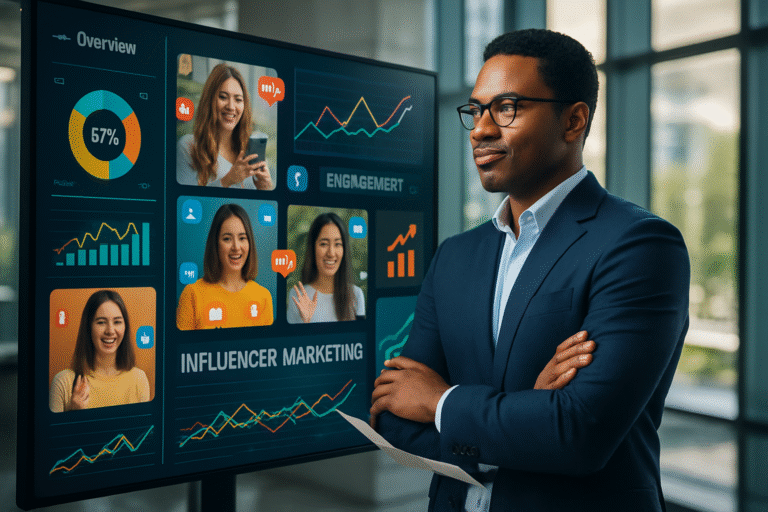
Essential Influencer Marketing Strategies for Entrepreneurs
Essential Influencer Marketing Strategies for Entrepreneurs
Influencer marketing has become a pivotal social media strategy for entrepreneurs seeking brand growth and enhanced personal branding. Essential influencer marketing strategies for entrepreneurs involve targeted planning, influencer selection based on data, authentic partnerships, diversified content approaches, and measurable outcomes. Applying these strategies enables entrepreneurs to leverage influencer marketing effectively and expand their customer base.
- Defining clear campaign objectives and understanding the target audience directs influencer selection and performance metrics.
- Using data-driven methods to select influencers—favoring micro and nano influencers—maximizes engagement and authenticity.
- Building long-term, authentic partnerships with influencers encourages trust, improves content quality, and enhances brand recall.
- Diversifying platforms and content formats tailors campaigns to specific audience segments and platform strengths.
- Measuring key performance indicators (KPIs) and return on investment (ROI) guides continuous optimization and budget allocation.
Introduction
Entrepreneurs aiming for sustainable brand growth increasingly incorporate influencer marketing into their social media strategies. Influencer marketing involves collaborating with individuals who have a dedicated audience to promote products or services authentically. The approach is particularly relevant when targeting niche or highly engaged audiences where traditional marketing may lack personalization. Effective influencer marketing supports brand visibility, trust-building, and customer acquisition. Entrepreneurs benefit from mastering these strategies to optimize limited marketing budgets and ensure scalable results.
Main Strategies and Implementation
Clear Objectives and Audience Definition
Setting precise objectives before campaign initiation is foundational. Goals may include increasing brand awareness, driving website traffic, generating leads, or boosting direct sales. Clarity in objectives guides influencer choice, content direction, and metric selection for performance evaluation. Additionally, a detailed understanding of the target audience allows entrepreneurs to align influencer followers’ demographics and interests with their ideal customer profiles, ensuring campaign relevance[3][2].
Data-Driven Influencer Selection
Moving beyond follower counts, entrepreneurs should assess influencers on engagement rates, audience demographics, previous campaign effectiveness, topical relevance, and authenticity. Micro-influencers, typically with 10,000 to 100,000 followers, frequently provide higher engagement percentages than macro-influencers, making them cost-effective for entrepreneurs focused on meaningful interactions[1][5][4]. Tools and analytics platforms facilitate this evaluation, minimizing wasted spend and enhancing ROI.
Authentic Long-Term Partnerships
Establishing sustained collaborations fosters trust and a stronger brand-influencer alignment. Rather than single sponsored posts, entrepreneurs are encouraged to engage influencers in co-creating content, participate in ambassador programs, or execute multi-post/multi-platform campaigns. These relationships often yield improved audience recall and credibility[1][5].
Clear Creative Briefs and Compliance Guidance
Well-constructed creative briefs ensure influencer content aligns with brand messaging without sacrificing authenticity. Briefs should outline campaign goals, key messages, required hashtags, calls to action (CTAs), and disclosure obligations. Providing examples while allowing creative freedom supports organic and compliant content creation. Transparency on legal and regulatory requirements prevents future complications[7][4].
Diversification Across Platforms and Content Formats
Entrepreneurs should deploy content tailored to the strengths of various platforms. Short-form native video content suits TikTok and Instagram Reels, while longer tutorials or detailed reviews perform well on YouTube. For B2B or professional networking, LinkedIn offers targeted reach. Mapping content formats to platform capabilities optimizes audience engagement and reach[1][5][3].
User-Generated Content and Product Seeding
Encouraging and capturing user-generated content (UGC) through product seeding provides authentic reviews and testimonials. This content can be repurposed across paid, owned, and earned channels, amplifying organic reach and enhancing social proof[1][2]. Product seeding campaigns often involve sending samples to selected influencers for honest demonstrations, generating credible content for reuse[1].
Combining Organic Reach with Paid Amplification
Amplifying top-performing influencer posts through paid promotion, including whitelisting or boosting, extends reach affordably and scales proven creative assets. This synergy between organic and paid strategies enhances campaign efficiency[1][5].
Measuring KPIs and ROI
Monitoring specific key performance indicators appropriate to defined objectives is critical. For brand awareness, impressions and reach matter, whereas engagement rates and sentiment reflect audience resonance. Traffic referral, conversion metrics, and sales data inform overall performance and return on investment. Entrepreneurs should use tracking mechanisms such as unique promo codes, affiliate links, and UTM parameters to attribute results accurately and facilitate optimization[3][2][5][1][2]. Regular analysis supports iterative improvements and budget adjustments.
Budgeting and Fair Compensation
Strategic budget allocation involves fair payment rates for influencers, consideration of performance-based compensation such as commissions or affiliate rewards, and funding for content production and paid amplification. Entrepreneurs with constrained budgets can prioritize micro-influencers and negotiate product-exchange deals to reduce upfront expenditure[4][6][1].
Legal Compliance and Brand Safety
Legal and regulatory compliance protects brands from sanctions and reputational damage. Entrepreneurs must ensure clear sponsorship disclosures, provide guidance on allowed claims, actively monitor influencer posts, and enforce contract clauses addressing violations. Pre-screening for past controversies and including morality clauses helps mitigate crisis risks[4][5].
Practical Campaign Ideas for Entrepreneurs
- Product Seeding and Honest Reviews: Dispatch sample products to targeted micro-influencers, requesting authentic demos or reviews. Resulting content serves as valuable user-generated material for multiple channels[1].
- Ambassador Programs: Establish long-term (6–12 months) partnerships with select influencers to develop consistent advocacy and repeated brand touchpoints[1][5].
- Limited-Time Promotions and UGC Contests: Launch hashtag challenges encouraging follower-created content for prizes, with influencers seeding initial engagement and visibility[1][2].
- Tutorial or Problem-Solution Series: Commission influencers to showcase your product addressing common challenges, effectively driving conversion and retention[5].
- Cross-Platform Funnels: Begin awareness campaigns on TikTok or Instagram Reels, direct interested users to longer-form educational content on YouTube or blogs, and utilize affiliates or landing pages for conversion tracking[5][3].
Measurement, Attribution, and Optimization
Defining primary KPIs aligned with campaign objectives and implementing tracking through UTMs, promo codes, and affiliate links enables accurate attribution of influencer marketing outcomes[2][3]. A/B testing different creatives, CTAs, and posting cadences reveals effective approaches, guiding resource allocation and scaling of successful tactics[2]. Comprehensive ROI calculations consider content production and amplification costs, with focus on creators and content formats offering the lowest cost per acquisition (CPA) or highest return on advertising spend (ROAS)[5][1].
Common Pitfalls and How Entrepreneurs Can Avoid Them
- Prioritizing Follower Counts Over Fit: Concentrating on influencer relevance and engagement metrics prevents inefficient spend and ineffective campaigns[4][5].
- Overly Prescriptive Creative Briefs: While brand guidelines are necessary, allowing influencer creativity maintains authenticity and audience connection[7][4].
- Lack of Measurement: Implementing tracking from campaign inception secures data for analyzing impact and optimizing future efforts[3][2].
- Ignoring Disclosure and Compliance: Clear instructions and contractual clauses ensure adherence to regulatory expectations, avoiding legal complications[4].
Practical Checklist to Launch an Influencer Campaign
- Establish campaign objectives and corresponding target KPIs[3].
- Identify target customer profiles and appropriate platform mixes for distribution[5].
- Vet 10 to 30 influencers based on relevance, engagement levels, audience demographics, and prior campaign outcomes[1][5].
- Prepare a concise creative brief and clear contract terms addressing deliverables, timelines, compensation, disclosure, and content usage rights[7][4].
- Set up tracking mechanisms including UTM parameters, unique codes, and affiliate links, and define reporting schedules[2].
- Approve influencer-generated content as needed, launch the campaign, and maintain active engagement on posts[4].
- Amplify top-performing posts with paid promotion, and repurpose content through owned and earned channels[1].
- Analyze campaign results, gather feedback, and iterate to improve subsequent campaigns[2][5].
Summary
Entrepreneurs aiming to harness influencer marketing for brand growth must implement comprehensive strategies combining clear goal-setting, data-driven influencer selection, authentic partnerships, and platform-specific content tactics. Measurement and compliance accompany creative efforts to sustain impact and mitigate risks. Employing methods such as product seeding, ambassador programs, UGC contests, and multi-platform funnels can elevate campaigns. Careful budgeting, performance tracking, and iterative optimizations ensure efficient use of resources and maximize ROI. Following these structured approaches enables entrepreneurs to build effective influencer marketing campaigns that deliver measurable results and enhance personal branding.
See the latest news and continue expanding knowledge on influencer marketing strategies at famemakr.com.