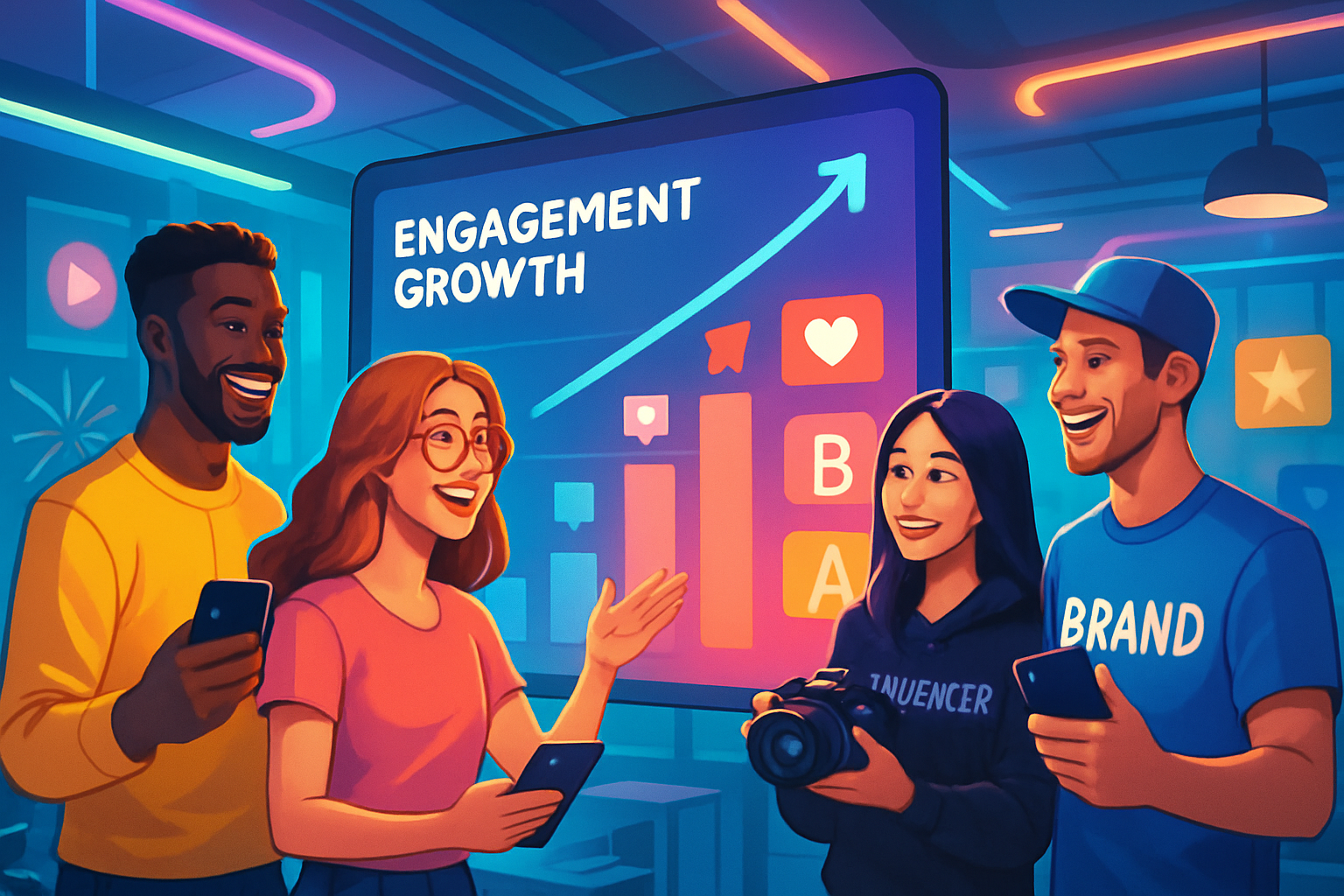
Effective Strategies for Influencer Marketing Growth
Effective Strategies for Influencer Marketing Growth
Influencer marketing has become a pivotal component of social media marketing, driving significant brand visibility and engagement. Effective strategies for influencer marketing growth enable brands to harness the power of influencers to reach targeted audiences and achieve measurable business outcomes. As the marketing landscape evolves, employing well-defined tactics ensures sustainable expansion and maximized return on investment.
- Clear goal setting and budget allocation anchor influencer marketing campaigns.
- The 3 R’s—Relevance, Reach, and Resonance—serve as essential criteria for influencer selection.
- Diversification across influencer types and social media platforms enhances campaign effectiveness.
- Data-driven optimization and cross-channel integration increase impact and campaign scalability.
- Continuous evaluation and adaptation keep marketing strategies aligned with shifting audience behaviors.
Introduction to Influencer Marketing Growth Strategies
Influencer marketing remains a dynamic and fast-growing facet of digital marketing, crucial for brands seeking increased engagement and brand visibility in an overcrowded marketplace. As social media platforms evolve and user behaviors shift, leveraging influencer partnerships with strategic planning becomes critical for achieving marketing objectives. The growth and maturation of this sector necessitate a dual focus on foundational marketing principles and the adoption of innovative techniques tailored to platform-specific contexts.
This comprehensive approach is relevant for marketers and brand managers aiming to improve their social media marketing effectiveness by integrating influencer collaborations that resonate authentically with target audiences.
Core Elements of Effective Influencer Marketing Strategies
Effective influencer marketing strategies begin with establishing precise goals and budgets. Whether the aim is enhancing brand awareness, fostering user engagement, or driving sales conversions, clear objectives guide the selection of suitable influencers and campaign design. Allocating a realistic budget aligned with these goals ensures operational efficiency and measurable outputs[4][8].
Influencer selection centers on the 3 R’s:
- Relevance: Choosing influencers whose content, audience demographics, and values align closely with the brand ensures authentic connections and messaging consistency[1].
- Reach: Evaluating beyond follower count, reach encompasses the influencer’s ability to access new and targeted segments, expanding potential market penetration[1].
- Resonance: Prioritizing influencers whose content generates meaningful engagement fosters deeper audience loyalty and action, enhancing campaign effectiveness[1].
Complementing influencer criteria, audience research and detailed buyer persona development are imperative. Tailored campaigns based on demographic and psychographic insights ensure content relevance and drive higher conversion rates[8].
Strategic Tactics for Influencer Marketing in 2025
As influencer marketing approaches 2025, strategies emphasize diversification, data integration, and cross-channel synergy to capitalize on its expanding potential.
Diversify Influencer Partnerships
Moving beyond isolated campaigns, diversified partnerships, including product seeding, long-term brand ambassadorships, and affiliate marketing arrangements, create sustained engagement and authentic promotion. Product seeding involves providing influencers with brand products for organic exposure, fostering trust and spontaneous content creation. Brand ambassadors maintain ongoing relationships that embed the brand’s presence in their communities, while affiliate agreements link performance directly with compensation[7].
Platform Strategy and Content Diversity
Balancing activity across well-established social media platforms like Instagram and YouTube alongside emerging channels such as TikTok and niche networks allows brands to capture diverse audience segments. Tailoring content formats and engagement practices specific to each platform’s user behavior and algorithm optimizes visibility and interaction[5][11].
Data-Driven Campaign Optimization
Utilizing analytics tools to monitor key performance indicators (KPIs)—including reach, engagement rates, conversion metrics, and video view distinctions such as autoplay versus engaged views—enables continuous refinement of targeting and content deployments[5][9]. This analytical approach enhances marketing strategies with actionable insights, fueling improved decision-making and efficiency.
Integrate Influencer Marketing Across Channels
Repurposing influencer-generated content across multiple platforms—including paid advertising, email marketing, website placements, and offline initiatives—maximizes return on investment by extending content reach and longevity. This comprehensive content strategy fosters a cohesive brand narrative and amplifies campaign impact[11].
Leverage Micro-Influencers and Niche Creators
Micro- and nano-influencers often deliver superior engagement rates and perceived authenticity within their communities compared to larger accounts. Engaging these creators bolsters credibility and enables brands to penetrate specialized audience segments effectively[5].
Operational Efficiency Through Automation
The adoption of artificial intelligence (AI) and automation tools for influencer discovery, contract negotiation, performance tracking, and content optimization streamlines campaign management. This technological integration supports scalability and consistency in executing influencer marketing strategies[5].
Execution and Measurement
Successful influencer marketing requires structured outreach, clear contractual agreements, and rigorous performance evaluation. Outreach processes should define deliverables such as posting frequency, content types, and exclusivity agreements. Compensation models vary based on influencer tier, platform complexity, and content demands[1][9].
Content repurposing amplifies campaign reach by converting organic influencer posts into paid advertisements across platforms like TikTok’s Spark Ads and Instagram’s Partnership Ads. Testing diverse creative variations within these ads allows marketers to optimize engagement and conversion rates[9][11].
Ongoing campaign review fosters identification of high-performing creators and content styles. This insight guides reinvestment and scaling of effective tactics while altering strategies to remain responsive to real-time data and platform changes[1][9].
Emerging Trends for Influencer Marketing in 2025
- Always-On Campaigns: Sustaining continuous influencer partnerships beyond discrete campaigns strengthens audience relationships and brand presence[5].
- Authenticity and Transparency: Compliance with increasing regulatory requirements necessitates clear disclosures and genuine collaborations, fostering consumer trust[12].
- Community Building: Encouraging influencers to create and nurture engaged communities around a brand drives long-term loyalty and advocacy[7].
- Cross-Channel Integration: Integrating influencer content into wider marketing activities—including SEO, paid media, and email—creates a unified, seamless customer experience[11].
Summary and Key Takeaways
Influencer marketing growth in 2025 depends on strategic planning with clear objectives and budget management. Diversifying influencer partnerships across types and platforms enhances reach and engagement. Leveraging data analytics and automation tools offers smarter targeting and campaign optimization. Integrating influencer content across marketing channels maximizes return on investment and reinforces brand messaging. Regular performance reviews and adaptability ensure ongoing campaign relevance amid evolving digital landscapes.
Brands adopting these effective influencer marketing strategies will be positioned to capitalize on the expanding influence economy, achieving meaningful growth and competitive advantage in a rapidly changing environment.
See the latest news on famemakr.com for updates on influencer marketing trends and insights.